The challenge facing planning agencies
Achieving ambitious targetswith diminishing resources.
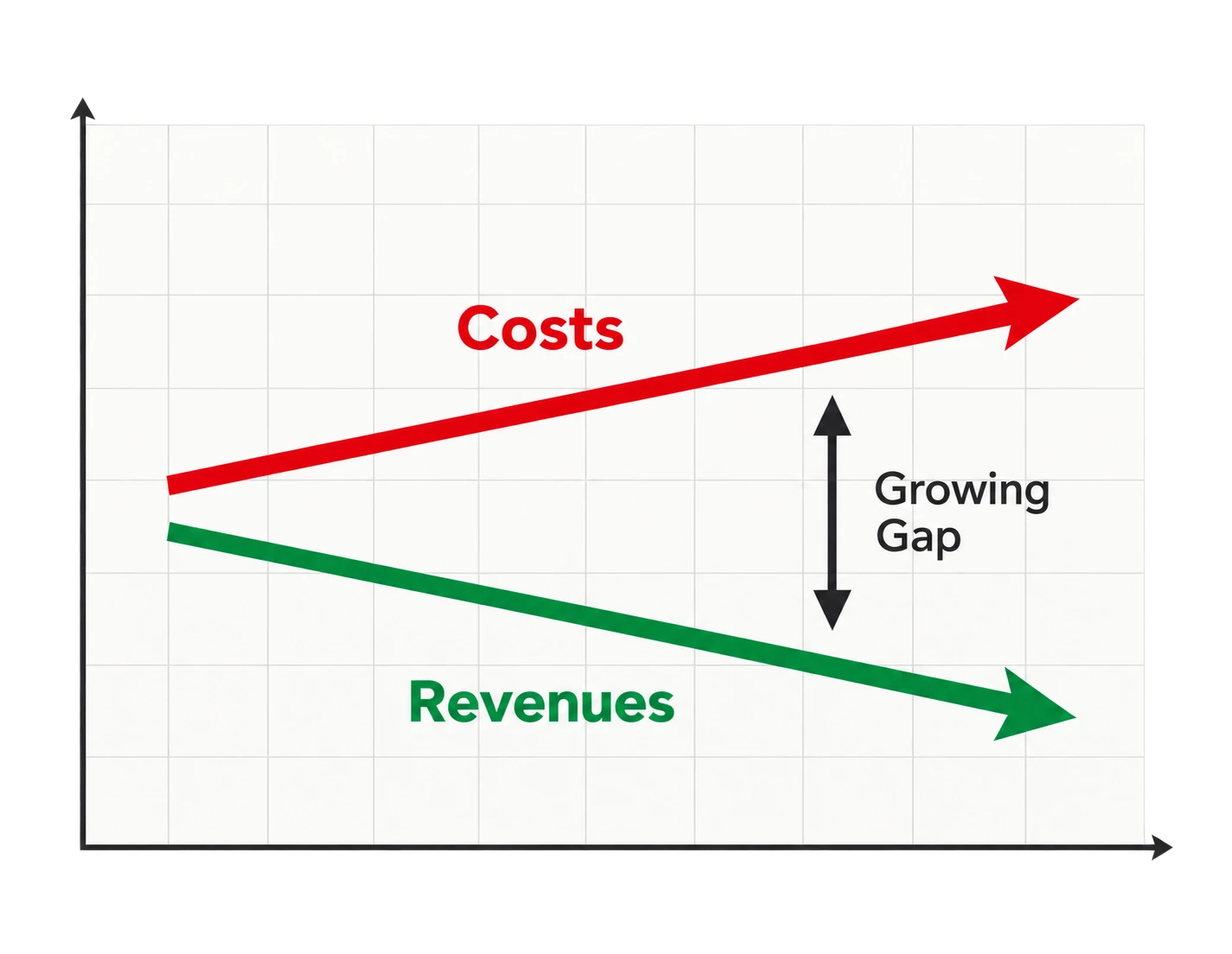
Regions have ambitious goals for mobility, housing, climate, equity, and economic development. Yet rising construction costs, operating deficits, and constrained budgets put those goals increasingly out of reach.
Fitting projects into an affordable plan does not necessarily establish how that plan will achieve the region’s goals.
How can regions close that gap?
Agencies need to understand which approach to meeting public needs—creating end-user value—can help infrastructure, service, and land use planning produce the desired results within available resources.
Regions that strengthen their planning capacities through Advanced Urban Visioning can gain an upper hand in responding to planning and funding challenges.
Read the article
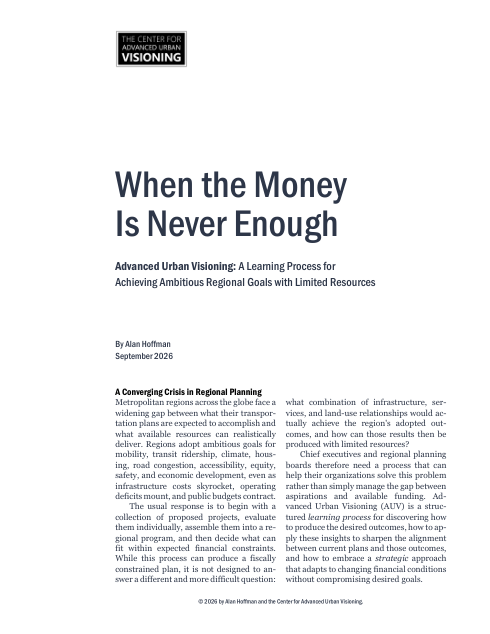
When the Money Is Never Enough
Advanced Urban Visioning: A Learning Process for Achieving Ambitious Regional Goals with Limited Resources
Download the articleWhat Advanced Urban Visioning offers
The AUV methodology encourages collaborative learning among a region’s planners, modelers, engineers, executives, political leadership, and stakeholders. It focuses on understanding transit’s competitive position, uncovering what combination of connectivity, travel time, and rider experience attracts the greatest number of riders, and aligning planning and evaluation tools with those insights.
Through a demonstrated learning process, participants explore how to achieve desired results within expected budgets and develop focused strategies that strengthen network effects. This helps the region identify investments that can best increase ridership, reduce operating costs, and advance adopted goals.